
The digital world is oversaturated with perfect, generic landscape photographs. Social media platforms are filled with identical images of famous vistas, captured from the exact same coordinates, under the exact same lighting conditions. While these “postcard” shots are technically flawless and visually striking, they often lack an essential element: a narrative. They show what a place looks like, but they fail to communicate what it feels like to stand there.
True visual storytelling in wild landscapes requires a shift in perspective. It means moving past simple documentation and embracing a narrative-driven approach. By treating the natural world as a dynamic canvas rather than a static backdrop, photographers can create immersive, emotionally resonant images that linger in the viewer’s mind long after they scroll past.
This guide explores the foundational techniques of narrative landscape photography, helping you capture the raw essence, scale, and emotion of the world’s wild spaces.
1. The Power of Scale: Placing Humanity within the Vastness
One of the most effective ways to break away from the traditional postcard formula is the deliberate inclusion of scale. In vast environments like glacial valleys, alpine ridges, or desert expanses, the true grandeur of the landscape can easily get lost in a flat, wide-angle composition.
By introducing a small, identifiable subject—such as a single hiker, a remote tent, or a lone vehicle on a winding track—you instantly give the viewer a point of reference.
Establishing Context: The human element acts as a proxy for the viewer, inviting them to step into the scene.
Creating Tension: Placing a small figure against towering geological formations emphasizes the raw power, isolation, and immense scale of nature.
Conveying Journey: A subject positioned along a visible path or ridge line suggests movement, exploration, and an ongoing story, transforming a static view into an active narrative.
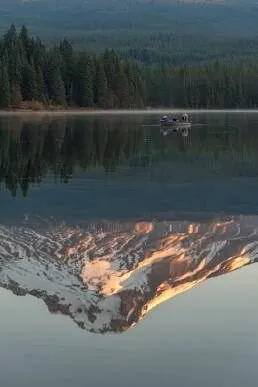
2. Dynamic Compositions: Using Leading Lines and Hidden Textures
A postcard shot typically places a prominent mountain peak or lake dead-center, providing immediate gratification but little visual longevity. Narrative storytelling relies on guiding the viewer’s eye through a deliberate journey across the frame.
Leading Lines with Internal Intention
Instead of relying solely on obvious pathways or roads, look for subtle, natural lines that slice through the terrain. Cracks in dried mud, the S-curves of a glacial river, the sweeping edge of a sand dune, or the directional flow of wind-swept grass can all serve as powerful visual guides. These lines should lead toward your secondary narrative element or fade into a mysterious horizon, prompting the viewer to wonder what lies beyond.
Textures and Layers
The foreground is your story’s introduction. Moving your camera close to the ground to capture the intricate details of frozen ice crystals, jagged volcanic rock, or alpine flora adds physical texture to the image.
By building your composition around three distinct layers—a detailed foreground, an expansive midground, and a atmospheric background—you create a three-dimensional depth that mimics the physical experience of being in the wilderness.
3. Embracing “Bad” Weather: Mood, Atmosphere, and Emotion
The pursuit of the perfect blue-sky day or a classic, clean golden hour often results in sterile images. The true character of a wild landscape is revealed when the weather turns unpredictable. Storm clouds, heavy fog, swirling mist, and driving rain are a visual storyteller’s greatest assets.
| Weather Condition | Narrative Impact | Photographic Technique |
| Heavy Fog & Mist | Creates mystery, isolates subjects, and strips away distracting background clutter. | Expose for the highlights to keep the fog clean and ethereal; look for high-contrast silhouettes. |
| Passing Storm Fronts | Drama, conflict, and localized light pockets that highlight specific landscape features. | Use a polarizing filter to deepen cloud contrast; look for the moments when sunlight breaks through gaps. |
| Overcast Skies | Soft, even illumination that reveals deep saturation, rich textures, and intricate details. | Focus on tight compositions, intimate landscape details, water reflections, and vibrant forest floors. |
When the atmosphere becomes a physical character in your frame, the image transcends geographic documentation. It becomes an exploration of mood, resilience, and the untamed spirit of the wild.
4. Tracking Micro-Stories: The Intimate Landscape
Visual storytelling doesn’t always require an ultra-wide lens or a massive mountain range. Often, the most compelling narratives are found by zooming in on the micro-stories occurring within the larger environment.
This approach, pioneered by masters of the craft, involves isolating small vignettes that capture the essence of a place without showing its horizon. Look for:
The way a single gnarled tree root clings to an eroded cliffside, symbolizing survival.
The abstract patterns created by mineral deposits in a geothermal pool.
A solitary patch of autumn color surrounded by dark, monolithic evergreens.
The fleeting interaction between light and a single ridge line, isolating abstract shapes and deep shadows.
By shifting your attention to these intimate scenes, you create a unique visual record that cannot be easily replicated by another photographer standing at the same viewpoint.
5. The Role of Light as a Narrative Engine
Light is not merely a tool for exposure; it is the ultimate narrative engine. The direction, color temperature, and quality of light dictate how a story is perceived.
Side-Lighting (Low Sun Angles): Carves out deep shadows and bright highlights, emphasizing the rugged textures of mountains, canyons, and fields. It adds a dramatic, gritty feel to the terrain.
Back-Lighting (Shooting Toward the Light): Creates glowing rims around subjects, emphasizes mist, dust particles, and ocean spray, and turns solid objects into mysterious silhouettes. This light is ideal for evoking nostalgia, hope, or isolation.
The Blue Hour (Pre-dawn/Post-sunset): Bathes the landscape in cool, tranquil tones. It suggests stillness, introspection, and the quiet transitions of the natural world.
A Note on Patience: Exceptional landscape storytelling cannot be rushed or scheduled. It requires spending time in an environment, observing how the light shifts, feeling the wind change, and understanding the rhythm of the location before you ever press the shutter.
Conclusion: Crafting Your Visual Legacy
Moving beyond the postcard shot is a conscious choice to prioritize emotion over perfection. It requires looking past the obvious, iconic view and searching for the subtle nuances that make a wild space truly unique. By mastering scale, manipulating natural compositions, seeking out atmospheric weather, and focusing on intimate details, you transform your photography from a simple travel log into a collection of profound, visual short stories.
The next time you step into a wild landscape, challenge yourself to leave the tripod markers behind. Look for the story that isn’t being told, embrace the imperfections of the elements, and capture a frame that speaks directly to the soul of the wilderness.